Concrete Pump Parts Knowledge
Concrete Pump Short Stroke: Sensor Timing, Hydraulic Imbalance, or Cylinder Leakage?
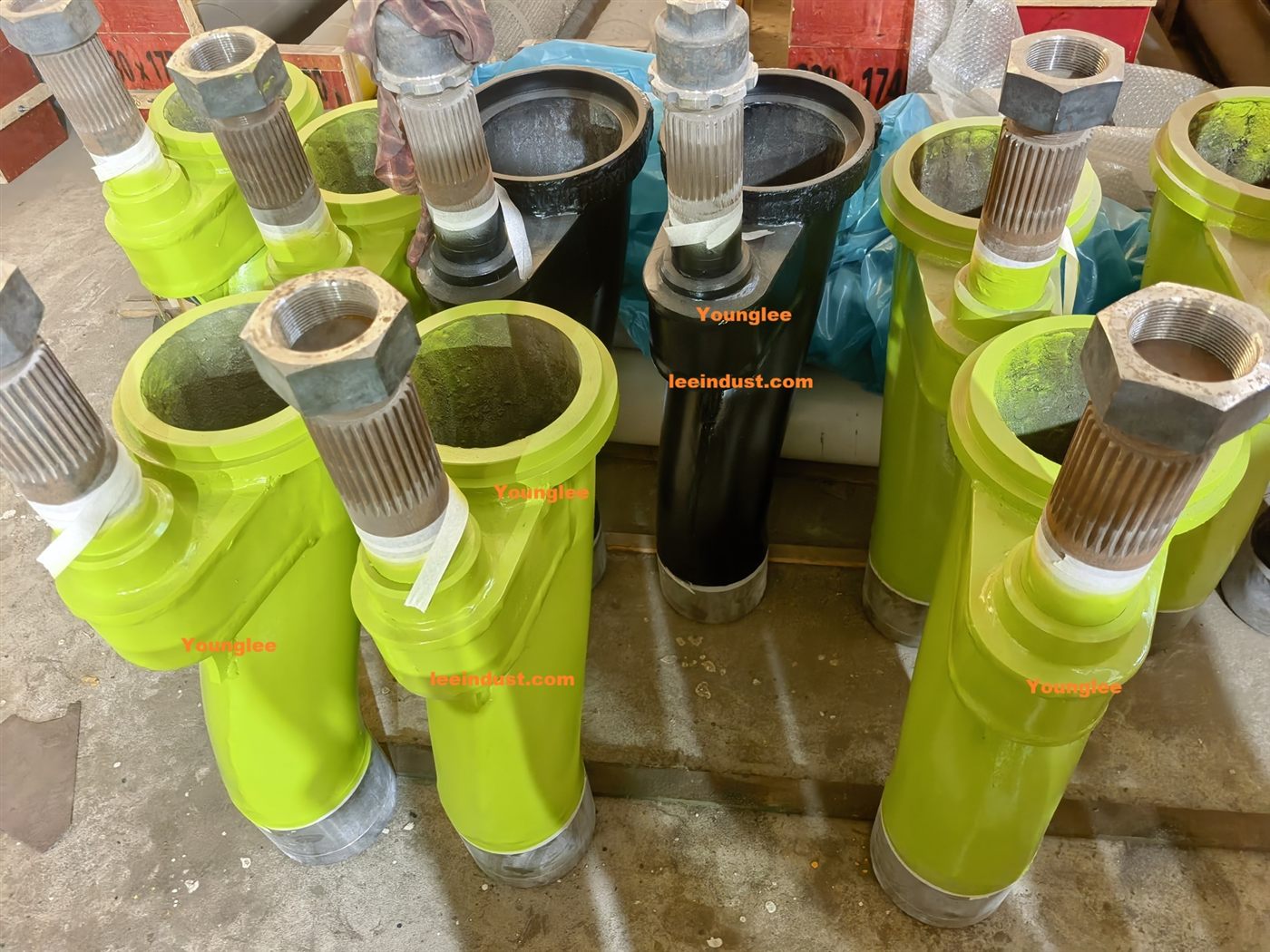
A concrete pump short-strokes when one or both pumping rams reverse before completing their intended travel. The immediate symptom may be lower output, uneven cylinder motion, an early changeover signal, or a pumping cycle that gradually loses stroke. The cause is not automatically a worn material cylinder. Depending on the pump design, the fault may originate in end-position sensing, hydraulic-oil imbalance between coupled drive cylinders, leaking drive-cylinder piston seals, or check-valve leakage.
The useful diagnostic question is therefore not simply, “Which cylinder should be replaced?” It is: Does the command change too early, or is the hydraulic system physically unable to carry the ram to the correct end position? That distinction prevents a sensor fault from being mistaken for cylinder damage—and prevents a temporary hydraulic rephasing from being mistaken for a permanent repair.
What Does “Short Stroke” Mean on a Concrete Pump?
Short stroke refers to incomplete physical travel of a pumping ram before the next reversal. It should not be confused with a low stroke rate, incomplete filling of a material cylinder, reduced hydraulic-pump flow, or an S-valve that fails to seat. Those conditions can all reduce output, but they describe different parts of the pumping cycle.
In a typical twin-cylinder concrete pump, each hydraulic drive cylinder moves a concrete-side delivery piston. One ram advances while the other retracts. At the changeover point, the control system reverses the drive-cylinder motion and commands the transfer valve to connect the newly loaded material cylinder to the outlet. The exact sensing and hydraulic architecture varies among manufacturers and models.
A genuine short stroke reduces swept volume because piston displacement equals bore area multiplied by actual travel. If actual travel is 10% shorter while bore diameter and stroke rate remain unchanged, geometric displacement per stroke is also 10% lower. Site output may fall by a different amount because cylinder filling, piston sealing, valve leakage, concrete consistency, and control timing also influence delivered volume.
Why Can a Coupled Drive-Cylinder Circuit Lose Stroke?
The hydraulic explanation is clearest in an OEM example. The REED B50 technical manual describes two identical hydraulic drive cylinders whose rod sides are connected. Oil displaced from the rod side of the extending cylinder helps retract the opposite cylinder. End-of-stroke proximity signals then command the main cycling valve and synchronize the S-tube shift.
That arrangement makes the cycle sensitive to both signal position and oil-volume balance. If oil accumulates where the circuit does not expect it, one cylinder may reach its mechanical limit while the other still has travel remaining. If a sensor changes state too early, the controls may reverse a hydraulically healthy cylinder before it reaches the intended endpoint. If oil leaks across a drive-cylinder piston seal, the relationship between supplied oil volume and piston position can drift from cycle to cycle.
This circuit description is not a universal schematic for every concrete pump. Some machines use different sensing locations, hydraulic connections, electronic logic, or fully hydraulic changeover. The applicable OEM manual must control any test, adjustment, or rephasing procedure.
Four Fault Mechanisms to Separate
1. The end-position signal occurs too early
A proximity switch or position sensor does not move the ram; it reports that a target has reached a defined position. If its mounting position, sensing gap, target, cable, connector, supply, or input channel is wrong, the controller can receive a valid-looking signal at the wrong physical point.
A stable, repeatable early reversal at nearly the same position is consistent with a switching-point problem, although it does not prove one. The REED trailer-pump troubleshooting guide lists misadjusted proximity switches among the causes of cylinders not fully extending. Multiquip publishes a model-family-specific LS-series proximity-sensor bench-test document, reinforcing an important service principle: sensor function should be tested against the correct wiring and model procedure rather than judged only by whether an indicator lamp illuminates.
Do not copy a sensor gap or bracket position from another pump. A sensor that detects metal on a bench may still be installed at the wrong switching point, may have an intermittent cable, or may be electrically incompatible with the control input.
2. Hydraulic oil volume has become unbalanced
In a coupled-cylinder circuit, excess oil on the connected rod side can prevent complete travel. The REED manual describes a model-specific cylinder-selection procedure that purges the excess oil through check valves and restores full stroke. Mayco LS-series operating manuals similarly list excessive oil on the cylinder rod side as a possible cause of short stroke.
A restoration procedure is diagnostically useful only when its result is observed over time. If the full stroke returns but gradually shortens again, the machine has demonstrated that the circuit can be rephased; it has not demonstrated that the underlying leakage or check-valve problem has disappeared.
Never improvise a bottoming or rephasing procedure. The control used, permitted operating mode, pressure behavior, personnel position, and stop criteria are model-specific. Forcing a cylinder against its end without the correct OEM procedure can create damaging pressure peaks or unexpected valve movement.
3. A drive-cylinder piston seal leaks internally
Internal leakage allows hydraulic oil to pass across the piston instead of producing only controlled piston movement. In a linked drive-cylinder circuit, that leakage can disturb oil balance and make the effective stroke deteriorate over repeated cycles. Both REED and Mayco LS400/LS500 operating guidance identify drive-cylinder piston-seal leakage as a short-stroke cause.
An internally bypassing drive cylinder may show no external oil leak. Diagnosis therefore requires the OEM-approved test method, which may compare movement, pressure response, drift, temperature, or isolated leakage. A pressure reading alone cannot identify which internal path is leaking.
4. A check valve does not maintain the intended oil balance
Check valves used to manage cylinder-to-cylinder oil volume must open and seat as designed. Contamination, a damaged seat, a weak or broken spring, or another internal defect may prevent reliable rephasing. REED directs technicians toward barrel-side check valves when excess rod-side oil recurs; Mayco troubleshooting tables likewise call for checking valves for contamination or a faulty spring.
Replacing or cleaning a valve should follow the hydraulic schematic and contamination-control procedure for the machine. A visually similar cartridge is not sufficient evidence of interchangeability. Cavity, flow direction, pressure rating, cracking behavior, seal material, and part number may all matter.
Symptom-to-Test Logic for Concrete Pump Short Stroking
| Observation | Possible mechanism | What would help verify it | Premature conclusion to avoid |
|---|---|---|---|
| One side reverses early at a consistent physical position | Sensor position, target geometry, or input timing | Compare actual ram position with the controller input and the OEM switching specification | “The delivery cylinder is worn” |
| Both strokes progressively shorten after rephasing | Drive-cylinder internal leakage or a check valve that does not preserve oil balance | Record the number of cycles and endpoint movement; perform the OEM leakage/check-valve tests | “Rephasing fixed it” |
| Displayed input changes, but the ram endpoint is wrong | Sensor mounted at the wrong position or a mismatched target | Verify sensor mounting, target, gap, part number, and wiring against the exact model | “The illuminated sensor is correctly adjusted” |
| Ram travel is complete, but concrete output remains low | Incomplete cylinder filling, piston bypass, valve leakage, mix behavior, or pipeline resistance | Separate geometric stroke from filling and sealing efficiency | “Low output proves short stroke” |
| The S-valve does not fully seat while ram travel appears normal | Slewing-cylinder, valve-bearing, lubrication, accumulator, flow-control, or mechanical restriction fault | Check valve end position and shift-circuit behavior independently | “The main cylinders caused the incomplete valve shift” |
A Safe Diagnostic Sequence
First, confirm the observation without entering a hazard zone. Keep guards and grates in place and follow the pump manufacturer’s isolation and stored-energy procedures. Use accessible indicators, approved marks, display inputs, or remote observation points. Never reach into the water box or hopper while movement is possible.
- Define which motion is incomplete. Identify the left or right pumping ram, direction of travel, operating mode, and whether the transfer valve also reaches its seat. “The pump hesitates” is not a sufficiently precise symptom.
- Separate stroke length from stroke rate. A cylinder can complete its travel slowly, or reverse early at normal speed. Those observations lead to different checks.
- Compare physical position with the changeover signal. Determine whether the control input changes before, at, or after the intended mechanical position. On machines that expose diagnostic inputs, record both sides rather than checking only the side that first attracted attention.
- Check repeatability. A fixed early endpoint suggests a different path from an endpoint that moves gradually over successive cycles. Record cold and warm behavior, but do not infer a viscosity fault without the required temperature, oil, and pressure information.
- Apply only the OEM-authorized rephasing test. If the manual provides one, record whether full travel returns and how long it remains. Recurrence is evidence requiring further leakage or check-valve diagnosis.
- Test the suspected subsystem. Inspect sensor hardware and electrical inputs for a timing fault; use the prescribed hydraulic tests for internal leakage and check valves. Do not adjust relief valves or bypass safety interlocks to make the symptom disappear.
How Short Stroke Affects the Concrete Side
A shortened drive-cylinder stroke shortens the travel of the connected delivery piston. That leaves part of the material-cylinder volume unused on each affected cycle. It can reduce theoretical displacement, disturb the time available for filling, and change the timing relationship between the piston and transfer valve.
These effects do not mean the Concrete Pump Delivery Cylinders are defective. Bore wear, damaged piston cups, or concrete buildup can create separate losses or resistance, so the concrete side still deserves inspection. The key is to document actual piston travel before ordering barrels or piston components.
The same caution applies to the Concrete Pump S-Valve Assembly. Short stroking may disrupt changeover timing, while a restricted or incomplete S-valve shift may mimic some of the same output symptoms. Confirm whether the ram fails to reach its endpoint, the valve fails to seat, or both events occur.
Why There Is No Universal Sensor Gap or Rephasing Method
Search results and parts marketplaces use broad names such as proximity sensor, magnetic switch, piston-position sensor, main-cylinder sensor, and stroke sensor. Those labels do not define electrical or mechanical compatibility. Sensors may differ in sensing principle, supply voltage, output type, connector pinout, thread, body length, cable, environmental rating, target requirement, and normally open or normally closed logic.
OEM procedures also differ. The REED example senses coupler position in the flush box and provides a specific manual cylinder-selection process. Other pumps may sense a drive-cylinder piston or target internally, use separate sensors, or calculate changeover through different control logic. Even within one brand, model generation and serial-number range can change the correct part and adjustment.
For that reason, this article does not publish a universal sensor gap, pressure spike, relief setting, or number of forced cycles. Values taken from one OEM manual would be unsafe and technically misleading if applied to another machine.
What Information Should Be Recorded Before Ordering Parts?
A short-stroke report should make the failed function traceable. Before requesting a sensor, valve cartridge, seal kit, drive-cylinder repair, delivery cylinder, or S-valve component, record:
- pump manufacturer, exact model, serial number, and pump-kit configuration;
- left/right side and extension/retraction direction affected;
- whether the endpoint is consistently early or progressively moves;
- controller input or fault-code behavior at the physical changeover point;
- sensor manufacturer, complete part number, thread, connector, cable, and wiring data;
- hydraulic-oil condition and temperature when the symptom occurs;
- result and duration of any OEM-prescribed rephasing procedure;
- results of authorized internal-leakage and check-valve tests;
- whether the material piston and transfer valve complete their corresponding motions;
- clear photographs of the sensor mounting, target, connectors, cylinder identification, and relevant parts.
This evidence lets a supplier distinguish a replacement-part request from an unresolved system diagnosis. It also reduces the risk of ordering a sensor with the right thread but the wrong electrical output, or a cylinder-related part that cannot correct the fault.
Practical Follow-Up Questions
Can a bad proximity sensor cause short stroke?
Yes. An incorrectly positioned, intermittent, damaged, or mismatched sensor can command reversal before the ram reaches its intended endpoint. Verify actual piston position and the control input together; a sensor indicator alone does not prove correct timing.
If rephasing restores full travel, is the pump repaired?
Not necessarily. Rephasing may remove an oil-volume imbalance. If the stroke shortens again, investigate the check valves and drive-cylinder piston seals using the model-specific procedure. Recurrence is part of the diagnosis.
Does low concrete output prove that the pump is short-stroking?
No. Low output can also result from incomplete filling, worn piston cups or material-cylinder bores, transfer-valve leakage, hydraulic flow limitations, unsuitable concrete, or pipeline resistance. Measure or otherwise confirm ram travel before treating short stroke as the root cause.
Can an S-valve problem look like short stroke?
It can create similar output irregularity or a disturbed changeover, but the motions are different. Observe whether the drive ram reverses early and whether the transfer valve reaches its correct seat. Diagnosing both endpoints prevents one subsystem from masking the other.
Conclusion
Concrete pump short stroking is a position-and-oil-balance problem before it is a parts-ordering problem. A repeatable early reversal points toward signal timing; a stroke that progressively deteriorates after rephasing points toward recurring hydraulic imbalance, internal drive-cylinder leakage, or faulty check-valve behavior. Low output alone proves none of these.
The most reliable decision comes from correlating actual ram position, changeover inputs, left/right behavior, valve seating, and the result of the OEM-prescribed hydraulic test. That evidence identifies whether the next action belongs in the sensor circuit, the coupled-cylinder circuit, the transfer-valve system, or the concrete-side wear components.