Quick Summary
Concrete pump delivery cylinders are supplied by Changsha Younglee Machinery for overseas distributors, repair companies, equipment service teams, and B2B importers. This page explains delivery cylinder function, bore and surface confirmation points, wear inspection, packing protection, and inquiry information. Buyers should send pump brand, pump model, bore diameter, length, flange photos, quantity, reference number, and destination country for accurate quotation.
Product overview
Concrete pump delivery cylinders, also called conveying cylinders, are among the most important wear-related parts in a truck-mounted concrete pump, trailer pump, or stationary pump. They work as the main pumping chambers where the concrete piston moves forward and backward under hydraulic power. Every stroke places the inner bore under sliding friction, slurry contamination, pressure change, and impact from aggregate. A well-made delivery cylinder helps the piston cup seal properly, keeps pumping output stable, and reduces the risk of leakage, scoring, premature seal wear, and low volumetric efficiency.
Changsha Younglee Machinery supplies replacement delivery cylinders for concrete pump service, repair, and distributor inventory. The first requirement for this part is not decorative appearance; it is the working condition of the inner bore. The bore must be straight, smooth, dimensionally controlled, and compatible with the piston and sealing system. The outer tube, flange area, welded structure, and mounting interface must also match the pump arrangement so that installation can be completed without unnecessary modification. For overseas distributors, a reliable delivery cylinder supplier must understand both manufacturing and practical field replacement. Our product page is written for that purpose: to help buyers identify the part, understand the technical points, and prepare a useful inquiry.
How the delivery cylinder works in a concrete pump
A concrete pump usually uses two delivery cylinders working alternately. While one cylinder draws fresh concrete from the hopper, the other cylinder pushes concrete into the valve and delivery pipeline. This alternating movement is synchronized with the S-valve, rock valve, or another transfer valve system. Because the pumping chamber is repeatedly exposed to wet concrete, cement paste, sand, stone, and cleaning water, the cylinder bore is always a demanding working surface. A small scratch or uneven wear pattern can quickly become a larger sealing problem because the piston cup travels across the same area thousands of times during daily operation.
The delivery cylinder therefore has a direct influence on pump output, pressure stability, maintenance interval, and overall downtime. When the bore is worn, the pump may lose pressure, concrete may bypass the piston, and the hydraulic system may work harder to achieve the same output. The operator may notice unstable pumping rhythm, reduced concrete volume, more frequent piston replacement, or abnormal slurry leakage. Replacing the cylinder at the right time can restore pumping efficiency and protect other related parts.
Manufacturing focus
For delivery cylinders, material selection and inner surface processing are the core manufacturing concerns. The tube must have enough strength and stability for the pumping load. The bore then needs accurate machining, honing, and surface treatment. Honing is especially important because it creates a controlled surface condition rather than a rough drilled or bored finish. A proper honed surface supports lubrication, sealing contact, and smooth piston movement. Depending on the application and requested specification, the working surface may use hard chrome plating or another wear-resistant treatment to improve service life.
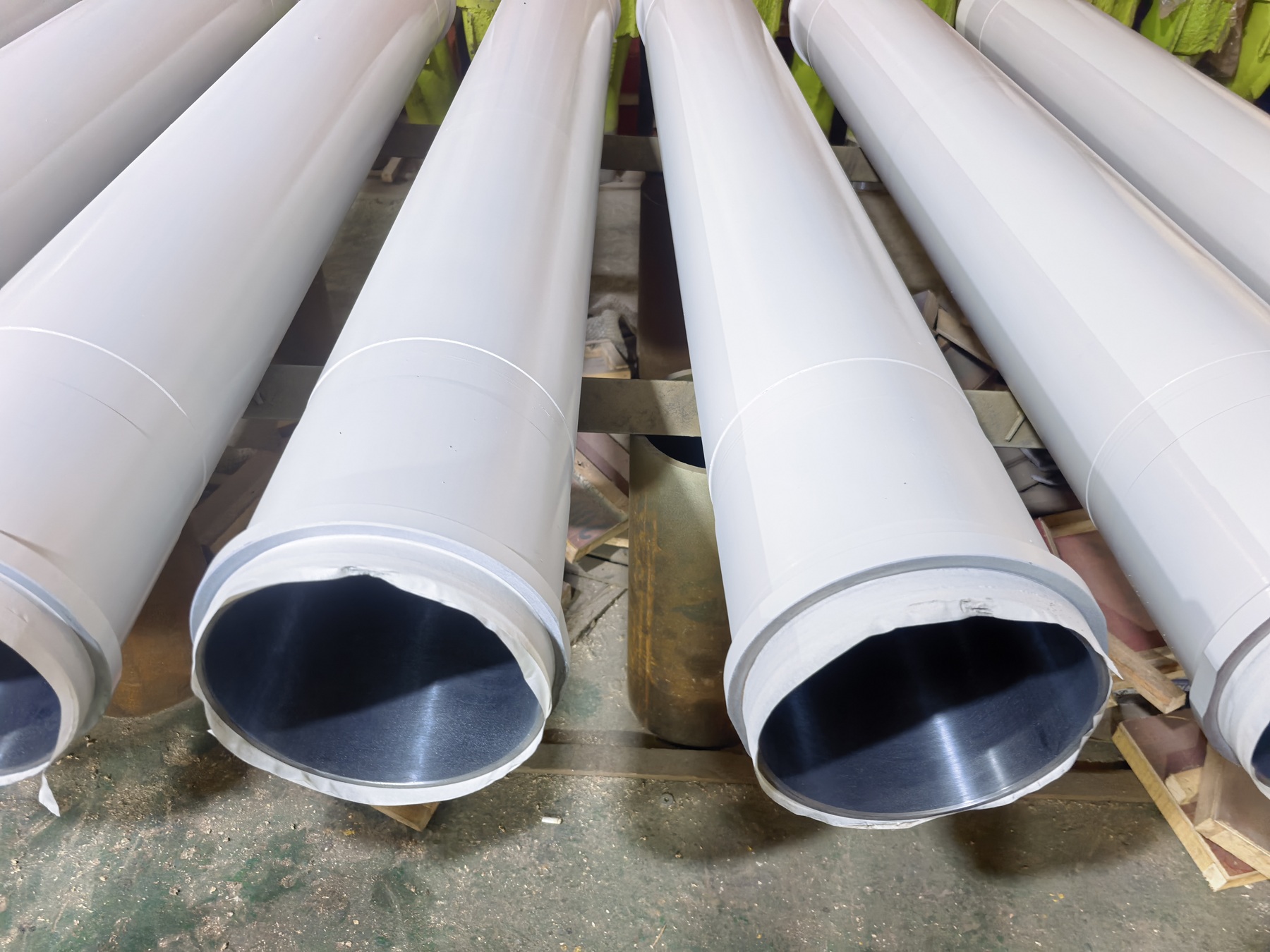
Changsha Younglee Machinery uses real production and inspection processes for delivery cylinders rather than treating the part as a simple steel tube. The available workshop images show raw material tubes, semi-finished cylinders, honing equipment, stock products, and packing. These details matter to technical buyers because they show the route from material to finished replacement part. The goal is to supply cylinders with stable bore quality, reliable mounting dimensions, and practical durability for field use.
Key specifications for inquiry
A delivery cylinder inquiry is most accurate when the buyer provides the pump brand, pump model, cylinder bore diameter, length, flange details, mounting hole pattern, and photos of the old part. If a reference part number is available, it should also be included. Many pumps use similar-looking cylinders, but small differences in length, flange structure, port position, wall thickness, or mounting interface can affect installation. A distributor may keep several common sizes in stock, but for project-based purchasing, confirmation before production or shipment is always recommended.
Typical inquiry terms include inner diameter, outside diameter, stroke-related length, surface finish, chrome layer requirement, flange type, and compatible pump model. If the part is intended for a specific market, the buyer may also request packing labels, neutral packaging, or custom marking. For repeat orders, keeping a clear record of drawings, photos, and accepted samples helps reduce future confirmation time.
Common replacement reasons
Delivery cylinders are replaced when the inner bore is worn, scratched, out of round, corroded, or unable to seal with new piston cups. In some cases, the old cylinder may look acceptable from outside, but the working surface already has enough wear to reduce pumping performance. Concrete slurry bypass, piston cup damage, and frequent seal replacement are common signs that the cylinder should be inspected. If the pump has been operated with poor lubrication, unsuitable piston material, contaminated concrete, or delayed cleaning, the bore may wear faster.
Another reason for replacement is planned maintenance. Distributors and service companies often recommend replacing delivery cylinders together with piston cups and related sealing parts when the wear pattern shows that the system is near the end of its useful service period. This approach can reduce repeat labor and avoid emergency downtime at the job site.
Compatibility and practical supply
Concrete pump fleets in overseas markets often include mixed equipment brands and different machine generations. For this reason, a replacement delivery cylinder supplier needs to communicate carefully. The same product name may not be enough. A buyer should identify whether the pump uses an S-valve, rock valve, or another valve system, and whether the cylinder dimensions match the exact model. For common pump types, our team can review photos and measurements and suggest the closest product route. For less common models, sample or drawing confirmation may be required.
Changsha Younglee Machinery supports distributor orders, repair shop orders, and batch supply. For stocked items, delivery can be faster. For made-to-order dimensions, manufacturing time depends on material availability, machining workload, and surface treatment requirements. Export packing should protect the bore, flange faces, and outer surface during handling. Heavy cylinders need suitable wooden cases or reinforced packaging so that the product arrives ready for inspection and installation.
Quality control points
Important quality checks include raw tube condition, bore diameter, straightness, inner surface finish, chrome or wear layer condition, flange dimensions, weld quality, and visual inspection before packing. The inner bore should be protected from impact and contamination after processing. Before shipment, photos can be taken to confirm product appearance and packing condition. For distributors building long-term product lines, quality consistency is more important than a single attractive quotation. A stable cylinder helps protect customer relationships because the part is difficult and expensive to replace if a quality issue appears after installation.
Our approach is to discuss the requested specification clearly, confirm the application, and prepare the product according to practical replacement needs. If the buyer has a drawing, sample, old invoice description, or pump parts manual reference, that information should be shared at the inquiry stage. The more accurate the identification, the more reliable the final supply.
Why buy from Changsha Younglee Machinery
Changsha Younglee Machinery is positioned as a factory-source supplier for concrete pump parts and accessories. The factory has long experience serving the domestic concrete pump maintenance market and has also supported export business through trading channels. The new English website is built to communicate directly with overseas buyers. For delivery cylinders, that means providing technical product information, real production images, and a clear inquiry path instead of only a short product name and a generic catalog image.
Buyers who work with us can request quotation based on pump model, dimensions, part photos, and quantity. We can help prepare product confirmation, discuss packing, and support repeat purchase records. For distributors, the advantage is not only one product; it is access to a focused concrete pump parts supply source that understands the working conditions of pumping equipment and the practical needs of replacement parts inventory.
Inquiry recommendation
To request a quotation for concrete pump delivery cylinders, please send the pump brand and model, cylinder inner diameter, total length, flange photos, quantity, destination country, and any reference number you have. If the old cylinder is still available, photos of both ends and the inner bore are very helpful. Our team will review the information and reply with product availability, technical confirmation questions if needed, and quotation details for your order.
Distributor stock planning
For a distributor, delivery cylinders should be planned as medium-to-high value inventory rather than emergency-only products. They are heavier than common seals and clamps, but they are also parts that can decide whether a concrete pump returns to service quickly. A good stock plan usually begins with the most common pump models in the local market, the cylinder sizes that appear most often in repair history, and the related piston cups or seal kits that customers normally buy at the same time. If the local market uses many mixed brands, it is better to keep clear identification photos and dimension records for each accepted cylinder instead of relying on short names.
When preparing a first order, buyers can choose a small batch of confirmed fast-moving models, inspect the fit and finish, and then build a repeat order list. This approach reduces inventory risk while giving the distributor confidence in quality and compatibility. For larger orders, the buyer can discuss packing marks, item labels, and batch separation so the warehouse team can identify each cylinder quickly. Good product records also help sales teams respond faster when customers send urgent repair inquiries from a job site.
Related product and inquiry links
For broader replacement programs, buyers can also review concrete pump replacement parts, quality control for concrete pump replacement parts, request a quotation for concrete pump parts, concrete pump s-valve assembly, concrete pump rock valve, concrete pump slewing cylinders.