Concrete Pump Parts Knowledge
Concrete Pump Water Box Fluid: Water, Oil, or Soluble Oil?
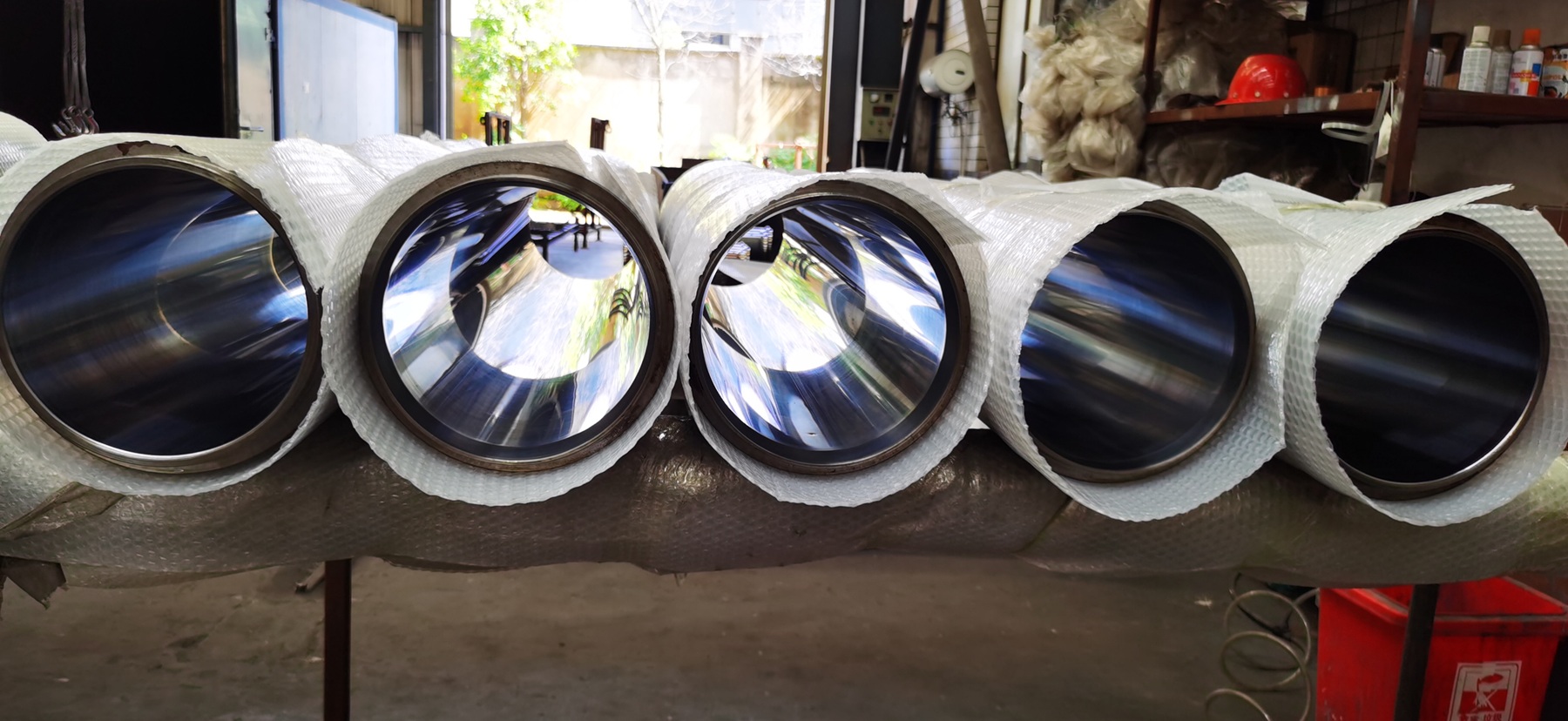
The correct concrete pump water-box fluid is the fluid specified for the exact pump model and serial range—not whatever the compartment happens to be called. Some pump kits use clean water. Others use SAE 30 motor oil, a manufacturer-approved lubricating oil, or a soluble-oil mixture. Those instructions are not interchangeable because piston design, lubrication method, box construction, seals, and cold-weather procedures differ.
This model-specific answer resolves a common maintenance trap. “Water box,” “wash box,” “flush box,” and “lubrication box” are often used for the space between the hydraulic drive cylinders and the concrete delivery cylinders, but the name alone does not identify the approved fluid. Before topping up an unfamiliar pump, verify its operator’s manual, serial number, decals, and current OEM service information.
Why can one pump use water while another uses oil?
The compartment occupies a similar position in many reciprocating concrete pumps, but it does not perform exactly the same duty in every design. It may rinse the rear of the delivery pistons, carry heat away from the piston and cylinder interface, lubricate piston components, expose the piston coupling for service, and provide a visible collection point for material that passes a worn seal. Some designs combine several of these functions; others add a separate oil-injection system or use a closed lubrication box.
The piston assembly also matters. A pump may use a rubber cup, a multi-piece piston with an oiler plate or felt element, a guide ring, or another manufacturer-specific arrangement. The approved fluid is selected around that system. Substituting a fluid because it “works in another concrete pump” ignores elastomer compatibility, viscosity, splash behavior, heat transfer, drainage, and the way the manufacturer expects contamination to be observed.
Putzmeister’s description of its KOV pump, for example, identifies the water box as serving lubrication, cooling, and piston access. Schwing’s SP 500–1250 operation manual instructs the operator to clean the water box and refill it with clean water. Those functions and instructions should not be converted into a universal rule for every pump.
What do current OEM manuals actually specify?
Representative manuals show why the machine documentation must control the decision:
| Example pump documentation | Specified medium or wording | Practical implication |
|---|---|---|
| Schwing SP 500 / 750 / 1000 / 1250 operation manual | Clean water is used when the water box is cleaned and refilled. | A generic recommendation to add motor oil would conflict with this manual. |
| Multiquip Mayco LS300 operation manual | Up to three gallons of SAE 30 motor oil in the lubrication box; level checked daily. | The compartment is oil-filled even though similar spaces on other pumps are called water boxes. |
| Multiquip Mayco C30HDGA operation manual | SAE 30 motor oil in an enclosed splash-lubrication box, with level read from the dipstick. | Correct grade, level, cleanliness, and level-ground measurement are part of the specification. |
| Earlier Mayco C30HD documentation | A soluble-oil and water mixture in the lubrication box, plus a separate metered piston-head oil system. | A family name is not enough; model generation and lubrication architecture matter. |
| REED A30HP-SKE technical manual | Diagnostic guidance refers to “water or lubricating oil, if used.” | REED documentation recognizes more than one service medium; the exact machine instructions still govern. |
This comparison does not authorize an owner to choose among the listed fluids. It demonstrates the opposite: the correct answer is design-specific. Even within a manufacturer’s range, revisions can change capacities, fluid grades, piston assemblies, or service intervals. Use the manual that matches the machine identification plate and serial range, then check whether an OEM bulletin supersedes it.
How should you identify the correct fluid on an unfamiliar pump?
Start with evidence that belongs to the machine, not with the color of the liquid already in it. A used pump may have been topped up incorrectly, modified, or operated with a convenient substitute.
- Record the manufacturer, model, serial number, and pump-kit version. A truck model alone may not identify the installed pumping unit.
- Find the applicable operation and maintenance manual. Confirm its revision and serial-number coverage. A parts catalog can identify the piston arrangement but may not state the operating fluid.
- Read the compartment decal and level-marking method. A dipstick, sight level, fill valve, or drain arrangement can support identification, but it is not a substitute for the manual.
- Check the delivery-piston assembly. Record the cup or seal design, guide components, felt or oiler parts, and any separate metered-lubrication system.
- Ask the OEM or authorized service provider when documents conflict. Do not resolve conflicting manuals by blending their recommendations.
For a fleet containing mixed brands, label each machine’s approved water-box or lubrication-box fluid at the service point. A simple maintenance record should include product name, grade or mixture requirement, fill level, change or cleaning interval, and the source document. That prevents an otherwise careful technician from applying the right procedure to the wrong pump.
What can happen if the wrong fluid is added?
The first risk is not necessarily immediate seizure. A wrong fluid may appear to work while changing lubrication, seal behavior, cooling, or contamination visibility. That delay can make the mistake difficult to recognize.
Water in an oil-specified lubrication box can reduce the intended oil film and create an emulsion when agitated. It can also make the level and contamination history harder to interpret. Oil in a clean-water system may be incompatible with the intended flushing routine, complicate disposal, obscure the appearance of hydraulic leakage, or affect components not designed for that medium. An unapproved detergent, antifreeze, release agent, or transmission fluid introduces additional variables; seal compatibility cannot be assumed from viscosity alone.
The shared failure mechanism is loss of controlled conditions at the piston-to-bore interface. The rear of the delivery piston travels near the boundary between the service compartment and the abrasive concrete side. Low level, dirty fluid, accumulated cement fines, or unsuitable lubrication can increase friction and heat, allow debris to circulate, and accelerate piston-cup or bore damage. The exact mechanism depends on the piston design, so a universal service-life claim would be misleading.
If the wrong fluid has been added, stop treating the compartment as a simple reservoir. Identify the quantity and product, consult the OEM’s service procedure, and determine whether draining, flushing, seal inspection, or waste handling is required. Do not run the pump merely to “mix it through” unless the manufacturer explicitly directs that method.
How does the specified fluid change diagnosis?
A technician must know the normal fill medium before interpreting what appears in the box. The same visual observation can mean very different things on two machines.
| Observation | Possible meaning | What to verify before concluding |
|---|---|---|
| Cement paste or sand appears in either a water- or oil-filled box | Concrete-side material may be passing the delivery-piston sealing interface. | Clean the box, compare both sides, inspect piston cups, map cylinder wear, and check whether contamination returns during operation. |
| Oil appears in a box that should contain clean water | Hydraulic fluid may be crossing a drive-cylinder rod-seal interface. | Confirm the original fill medium, oil color, hydraulic reservoir trend, rod condition, and the OEM leak-test procedure. |
| Oil is present in an oil-specified lubrication box | This may be completely normal. | Check grade, level, cleanliness, odor, water content, and cement contamination rather than diagnosing leakage from oil presence alone. |
| Fluid level falls without an external box leak | Fluid may be moving past worn piston components or another internal sealing interface. | Inspect both cylinder/piston and hydraulic sides; use the model-specific troubleshooting sequence. |
| Milky oil or separated water in an oil box | Cleaning water, condensation, or another source may have contaminated the lubricant. | Identify the ingress route and follow the approved change/flush procedure; appearance alone does not identify the failed part. |
This is why maintenance records should not say only “water box checked.” Record the normal fluid, level, temperature or unusual heat, visible solids, side-to-side differences, and how quickly contamination reappears after cleaning. Those observations can separate an incidental washout residue from recurring piston bypass or hydraulic leakage.
What maintenance rules apply regardless of fluid type?
Several principles survive the model differences. Keep the approved medium at the specified level and clean enough for its intended duty. Remove accumulated cement paste before it becomes an abrasive bed. Inspect covers, drains, breathers, and level indicators. Watch for a sudden change in level, color, debris, temperature, or piston noise.
Never reach into an open water box or flush box while the pump can stroke. Stop the engine, remove or control the starting means, release stored hydraulic and accumulator energy, and follow the manufacturer’s lockout procedure before opening covers or performing an inspection. A cover switch is a safeguard, not permission to work beside moving piston rods.
Freezing conditions need a separate check. Water-filled systems commonly require draining for transport, overnight storage, or shutdown below freezing. Oil-filled boxes may have viscosity, contamination, or storage instructions instead. “Drain the water box” in one manual does not prove that another pump should be left empty; follow the document for the actual machine.
Should fluid be changed when pistons or delivery cylinders are replaced?
At a piston or cylinder repair, the compartment should normally be treated as part of the controlled reassembly environment. Old fluid can contain cement fines, elastomer fragments, metal particles, water, or an unknown substitute. Reusing it can carry the evidence—and the abrasive contamination—straight into the repaired interface.
Before commissioning, confirm the approved fluid and level, inspect the piston components, clean the compartment and drains, and check the condition and alignment of the Concrete Pump Delivery Cylinders. If a cylinder bore is tapered, oval, scored, corroded, or misaligned, changing the box fluid cannot correct that geometry. Likewise, a new cylinder does not compensate for an incorrect piston assembly or an unsupported lubricant substitution.
During initial controlled operation, monitor both sides for abnormal noise, heat, rapid contamination, or level loss. The manufacturer’s commissioning and safety procedure should determine whether observation occurs with covers fitted, through a sight point, or after shutdown. Do not create an improvised viewing method around moving rods.
What information should a workshop or buyer record?
When a lubrication problem leads to piston or delivery-cylinder purchasing, provide more than the cylinder diameter. A useful service or quotation package includes:
- pump manufacturer, model, serial number, and pump-kit identification;
- the manual reference and specified box fluid, grade, mixture, capacity, and fill level;
- delivery-cylinder bore, total length, flange and mounting details, and part number;
- piston assembly type, diameter, part numbers, and photographs of all layers or guide components;
- which side showed contamination, level loss, chatter, heat, or repeat piston wear;
- bore measurements for diameter, taper, ovality, and any local scoring;
- photographs of the fluid and settled debris before disposal, plus the time since the last cleaning.
That record turns “the water box was dirty” into evidence that can support a repair decision. It also helps a parts supplier distinguish a fluid-maintenance problem from a worn piston, damaged bore, alignment fault, or hydraulic-cylinder seal issue.
Common questions about concrete pump water-box fluid
Can SAE 30 oil be used in every concrete pump lubrication box?
No. SAE 30 appears in specific Mayco manuals, but Schwing and other pump documentation may specify clean water, while other designs may call for a different oil or mixture. The exact manual and serial range control.
Does “water box” always mean it should contain water?
No. Industry terminology is inconsistent. Some manuals call the area a water box or flush box while discussing water or lubricating oil. Identify the approved medium from the service specification, not the noun used by a technician or parts listing.
Can hydraulic oil in the box be normal?
It can be normal only when the applicable manual approves hydraulic fluid or another oil as the fill medium. In a clean-water system, new oil contamination can indicate a hydraulic-side leak. Confirm the baseline before diagnosing the source.
Is a soluble-oil mixture the same as pouring motor oil into water?
No. A soluble-oil product is formulated to emulsify at a specified concentration. Randomly mixing motor oil and water does not reproduce an OEM-approved mixture. Use the product type and ratio stated by the manufacturer.
Will changing the fluid stop concrete slurry from entering the box?
Not if slurry is crossing worn or loose piston cups or a damaged delivery-cylinder interface. Fresh fluid may make recurrence easier to observe, but the sealing parts, bore condition, alignment, and operating history still require inspection.
Use the manual, not the compartment name
The practical rule is simple: a concrete pump water box may require water, oil, or a specified emulsion, and the correct choice belongs to the machine design. Confirm the pump-kit identity and current OEM documentation before filling, mixing, or changing anything. Then keep the approved medium clean, at the correct level, and useful as a diagnostic baseline.
That discipline protects more than the fluid compartment. It supports the delivery piston, preserves the working bore, makes contamination evidence interpretable, and prevents a small maintenance assumption from becoming repeat piston or cylinder damage.