Concrete Pump Parts Knowledge
Concrete Pump Slewing Cylinder Rod Pitting: Reseal, Rechrome, or Replace?
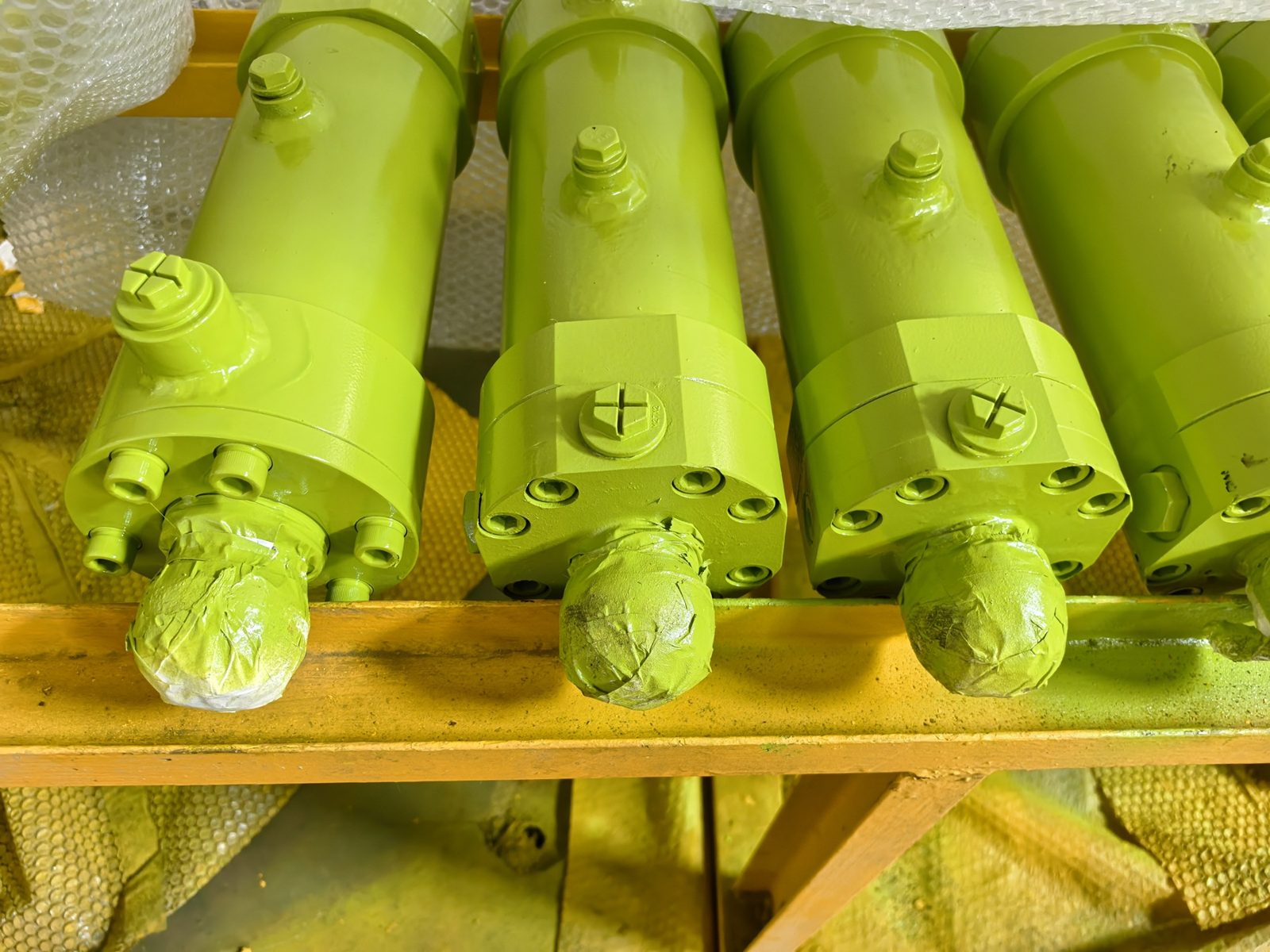
A pitted piston rod on a concrete pump slewing cylinder is not automatically a reason to replace the complete cylinder, but it is rarely solved by installing a seal kit alone. The decision depends on where the damage lies, whether the chrome coating is still sound, whether rod diameter and straightness remain within the cylinder specification, and whether the gland, guide, bore, mounts, and hydraulic circuit are also serviceable. Light staining may clean away. True pits, flaking chrome, raised burrs, or a bent rod require dimensional inspection and usually professional rod repair or replacement.
This distinction matters because the rod is a moving sealing surface, not simply a polished linkage. A superficially tidy reseal can leak again quickly when the underlying counterface remains rough or dimensionally damaged.
Why does rod pitting damage a slewing-cylinder seal?
Depending on the concrete pump design, one or more slewing cylinders—also called swing cylinders or shift cylinders—move the S-tube or another transfer valve between the two material-cylinder outlets. REED parts documentation, for example, identifies the cylinder rod, rod wiper, rod seal, piston seals, and wear ring as separate elements of a swing-ram cylinder. The exact arrangement varies by pump, but the sealing principle is familiar: the rod repeatedly passes through the cylinder head while the rod seal retains hydraulic oil and the wiper limits the entry of external contamination.
A pit interrupts the continuous counterface that the seal lip needs. A depression can carry a small film of oil past the lip; a sharp or raised edge can abrade the lip; loose corrosion or coating fragments can contaminate the gland and hydraulic oil. The observed result may be an oil film, a repeating droplet, a wet streak on one side of the rod, or rapid leakage after a recent reseal.
The damage does not have to be evenly distributed. One narrow axial band may cross the rod seal on every valve change, while most of the circumference still appears polished. This is why inspecting only the most visible face of the rod can miss the controlling defect.
Rust staining, pitting, scoring, and chrome failure are different findings
“The rod is rusty” is an observation, not yet a repair decision. Clean the surface using the machine or cylinder manufacturer’s approved method, then classify what remains. Do not use an aggressive in-place abrasive treatment as a substitute for inspection; it can remove coating, change local diameter, round over a defect without eliminating it, and leave a surface that looks bright but does not seal correctly.
| Observation after cleaning | Possible mechanism | What must be verified |
|---|---|---|
| Discoloration with no detectable surface break | Surface deposit or very light oxidation | Coating continuity, texture, diameter, and whether the mark lies in the seal travel |
| Small depressions below the surrounding surface | Base-metal corrosion beneath or through damaged coating | Pit depth and distribution, remaining rod size, coating adhesion, and repair allowance |
| Raised edge, dent, or displaced metal | Impact during handling or contact with adjacent hardware | Whether the defect has damaged the seal, guide, or rod geometry |
| Longitudinal score | Hard contamination, side load, damaged guide, or contact with another component | Guide clearance, gland condition, alignment, straightness, and contamination source |
| Flaking, blistering, or a sharp coating boundary | Loss of coating adhesion or corrosion developing beneath the coating | Extent around the full circumference and whether a qualified recoat is feasible |
| One-sided polishing plus one-sided seal or guide wear | Misalignment, worn pins or bushes, bent rod, or side loading | Mounting geometry, linkage movement, rod runout, gland and guide wear |
A common field check is whether a mark catches a fingernail. That may help locate a raised edge, but it is not a traceable acceptance test. It says nothing reliable about local diameter, pit depth, straightness, coating thickness, or the surface profile seen by the seal.
Why can a new seal kit leak again?
Replacing the rod seal removes a damaged wear component; it does not restore the surface running through it. Parker’s cylinder maintenance guidance directs technicians investigating external leakage to examine the piston rod for dents, gouges, and score marks, and to replace a rough rod. A separate Parker troubleshooting bulletin links damaged rods and rod bearings with premature rod-seal wear and identifies poor alignment and bent rods as common causes.
Surface texture also matters beyond visible damage. SKF explains that rod-seal performance depends on the interaction among the seal material, seal profile, counterface, and hydraulic fluid. Its guidance for common induction-hardened, chrome-plated piston rods uses several profile parameters rather than roughness average alone. SKF lists a typical Ra range of 0.05–0.3 µm for thermoplastic and rubber seals and 0.05–0.2 µm for PTFE seals, while explicitly warning that alternative rod materials and coatings may need different specifications and finishing methods. These are reference values for the stated SKF sealing context, not universal acceptance limits for every concrete pump cylinder.
Two rods with the same Ra value can still behave differently because one profile has protruding peaks that abrade the seal while another has valleys that retain a lubricating film. A repair quotation that states only “polish the rod” therefore leaves important questions unanswered: after what process, to what final diameter, with which coating system, and against which seal-supplier or cylinder specification?
How should a pitted rod be inspected?
First make the machine safe under the correct OEM procedure. Concrete pump valve systems can contain stored hydraulic energy and moving parts around the hopper. Isolate power, relieve the specified circuits, prevent unintended valve or agitator movement, and support or restrain components as the manual requires. Do not position anyone near the hopper mechanism merely to obtain a better view of an energized rod.
Once the cylinder is safely accessible, use an inspection sequence that preserves evidence:
- Record the as-found condition. Photograph the wet pattern, rod position, damaged sector, surrounding hardware, and both cylinder mounts before cleaning.
- Clean without hiding the defect. Remove oil, concrete residue, and loose corrosion with an approved non-damaging method. Do not grind a sharp edge away before its location and extent have been documented.
- Map the active seal travel. Mark where the rod passes through the gland over a complete stroke. Damage inside that band has a direct opportunity to contact the rod seal.
- Inspect the full circumference. Use adequate lighting and rotate or remove the rod only when the model-specific service procedure permits it. Check for pits, scores, dents, peeling, impact marks, and localized polishing.
- Measure geometry. A qualified cylinder shop should compare rod diameter at several axial and circumferential positions, evaluate straightness or runout with an appropriate setup, and check repaired features against the original drawing or approved specification.
- Inspect the components that guide the rod. Examine the wiper, rod seal, buffer seal where fitted, gland, bearing or guide, piston wear rings, bore, pin joints, clevises, and brackets. One-sided wear can point to a load-path problem rather than corrosion alone.
- Check the failure environment. Look for wash water, chemical overspray, weld spatter, damaged bellows or guards where fitted, failed wipers, long-term exposed storage, hydraulic contamination, and linkage interference.
The inspection should separate surface restoration from root-cause correction. Rechroming a straight rod may restore the counterface, but it will not correct a worn pivot that pushes the cylinder off-axis.
Polish, rechrome, replace the rod, or replace the cylinder?
There is no responsible universal pit-depth threshold for every slewing cylinder. Rod material, heat treatment, coating system, original diameter, seal design, pressure, duty cycle, and the repair process all affect the decision. Use the OEM or cylinder drawing when available and obtain a written disposition from a competent cylinder-repair or manufacturing source.
| Possible disposition | When it may be considered | What can rule it out |
|---|---|---|
| Clean and professionally finish | The mark is superficial; coating remains continuous; final texture, diameter, and geometry can meet the applicable specification | Remaining pits, coating loss, a measurable low spot, or an unknown finish |
| Strip, grind, and rechrome | The base rod and critical features are sound, sufficient stock remains for a controlled restoration, and the finished rod can be verified | Deep or widespread corrosion, cracks, excessive material removal, bent geometry, damaged threads or welded ends, or uncertain heat-treatment implications |
| Manufacture or purchase a replacement rod | The original cylinder is otherwise serviceable but the rod cannot be restored economically or traceably | Missing material data or drawings, unverified rod-end geometry, damaged piston interface, or repair cost and lead time approaching complete-cylinder replacement |
| Replace the complete cylinder | Rod damage accompanies a worn bore, damaged gland, distorted mounts, cracked welds, uncertain prior repairs, or unavailable internal parts | A documented rebuild that can restore every critical feature with acceptable cost, lead time, and test evidence |
Engineering chromium is not just a cosmetic layer. ISO 6158 covers electrodeposited chromium coatings for engineering purposes and treats thickness, surface finish, hardness, adhesion, porosity, heat treatment, and other process requirements as specified characteristics. A workshop promising only “new hard chrome” has not yet defined a complete repair. The purchase order or repair specification should state the required finished condition and inspection evidence.
What should a buyer provide when ordering a replacement?
If complete replacement is selected, match more than the visible shape. A buyer requesting Concrete Pump Slewing Cylinders should provide the pump manufacturer, model, serial number, cylinder part number, and clear photographs of the complete unit and both mountings. Where drawings or reliable measurements are available, also provide:
- rod and bore diameters, stroke, and installed closed and open lengths;
- pin diameters, mounting widths, center distances, and clevis orientation;
- port thread, position, orientation, and any manifold or check-valve features;
- left-hand or right-hand location where the machine uses different cylinders;
- rod-end thread, flats, locknut position, and the recorded adjustment length;
- seal-kit or gland references, if known, and the hydraulic fluid used;
- the observed failure, including whether the rod is pitted, bent, scored, leaking, or worn on one side;
- any measured pin, bush, bracket, lever, or alignment damage that could affect the replacement.
Do not round a measured dimension to the nearest catalogue size. A similar bore and stroke do not prove interchangeability; mounting geometry, rod-end adjustment, cushion or check features, pressure rating, and port layout can change switching position and timing.
How can rod pitting be prevented from returning?
Protect the rod from both corrosion and mechanical damage. Parker advises protecting exposed rods on equipment stored outdoors with an appropriate rust-inhibiting compound. The exact preservative must be compatible with the rod coating, wiper, seals, hydraulic fluid, and the pump manufacturer’s maintenance instructions.
When the machine will be idle, use the approved parked position that minimizes exposed rod length without creating another hazard. Keep wash water and aggressive cleaning chemicals away from the gland. Replace a damaged wiper before it permits contamination to reach the rod seal. Shield rods from welding spatter, dropped tools, and contact with hardened concrete. Check pins, bushes, brackets, and linkage alignment whenever wear is concentrated on one side.
After repair or replacement, recommission at the speed and sequence specified by the OEM. Watch both directions of valve movement, check for external leakage, confirm full but non-binding travel, and compare the left and right mechanisms where applicable. A dry static check alone does not prove performance under concrete load, but the first loaded test should occur only after the safe unloaded checks are satisfactory.
Conclusion
The correct question is not simply whether a pitted slewing-cylinder rod can be made shiny again. The question is whether the complete rod-and-seal interface can be restored to the required surface, diameter, straightness, coating, alignment, and cleanliness—and whether the rest of the cylinder and linkage justify that repair. Document the defect before altering it, inspect the full load path, and compare professional rod restoration with a new rod or complete replacement using traceable specifications rather than appearance alone.
Technical references
- REED B30 operation, maintenance, and parts manual—swing-ram cylinder components and terminology.
- SKF Hydraulic Seals: General Technical Information—dynamic rod counterfaces, surface-profile parameters, and coating qualifications.
- Parker cylinder operating and maintenance manual—rod inspection, leakage diagnosis, storage, and corrosion protection.
- Parker: Avoiding Rod Seal Leakage and Premature Wear—rod damage, bearing wear, side load, and alignment.
- ISO 6158:2018—electrodeposited chromium coatings for engineering purposes.