Concrete Pump Parts Knowledge
Concrete Pump Piston Guide Ring: Function, Chatter, and Ordering Checks
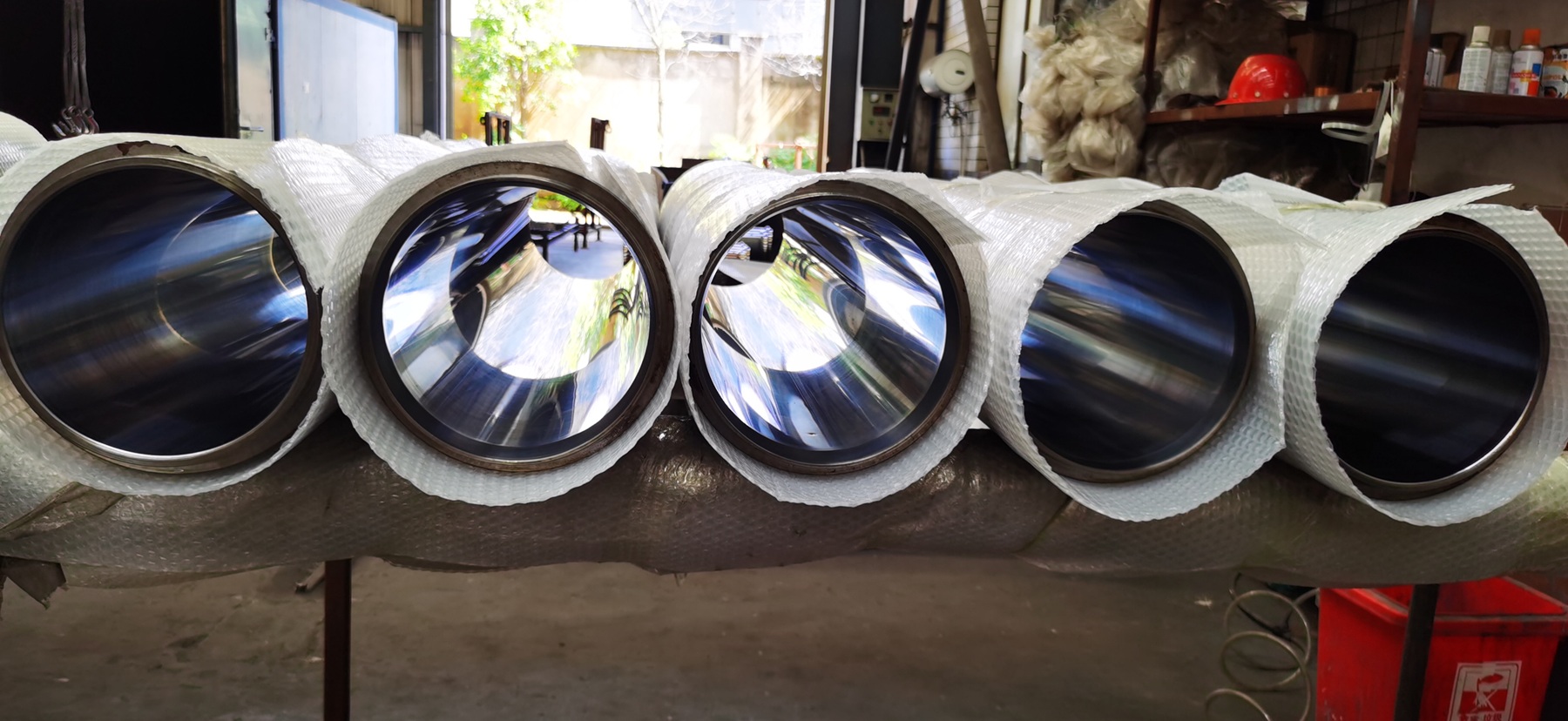
A concrete pump piston guide ring supports and guides the delivery-piston assembly as it travels through the material cylinder; it is not automatically the part that provides the primary concrete seal. On multi-piece piston designs, the guide ring and the delivery-piston seal are separate wear items with different jobs. That distinction matters when a pump develops cylinder chatter, uneven piston wear, or repeated seal damage: changing only the rubber or polyurethane sealing element may leave a worn guide component—or a damaged cylinder bore—untouched.
The terminology is less consistent than it first appears. Parts catalogs may use piston guide ring, guide ring, guide band, or guiding ring. The same machine may also contain guide rings inside its hydraulic drive cylinders, while its S-valve system has a completely different wear ring. A professional diagnosis or quotation therefore needs the assembly location and part reference, not the words “guide ring” alone.
What does a concrete pump piston guide ring do?
On the concrete-side piston design documented in the REED Rock Master A30 maintenance manual, the guide ring is installed on the piston adapter and is described as a support and wear ring for the material cylinders. In practical terms, it provides a guided, replaceable contact element behind or alongside the piston-seal arrangement. The exact position, profile, and retention method remain model-specific.
OEM parts catalogs confirm that a guide ring is not merely another name for every delivery piston. Putzmeister’s Original Parts and Delivery Lines catalog lists a long-life delivery-piston assembly, delivery-piston seal, and guide ring as separate items for several nominal diameters. The Concord parts catalog similarly separates the guide ring and rubber seal on its three-piece 230 mm and 280 mm delivery pistons.
Those examples establish a useful principle, not a universal construction rule. Some pumps use a one-piece cup or a different piston architecture. Others use a multi-piece ram in which the seal, guide ring, plates, adapter, and fasteners must be identified individually. The applicable illustrated parts list should decide what the machine contains.
Guide ring, piston seal, and S-valve wear ring are different parts
| Term | Typical location | Primary role | Common purchasing error |
|---|---|---|---|
| Delivery-piston guide ring | Concrete-side piston or piston adapter inside the material cylinder | Supports and guides the piston assembly; serves as a designated wear element on applicable designs | Ordered as if every piston diameter used the same profile or piston architecture |
| Delivery-piston seal or piston cup | Concrete-side piston in contact with the material-cylinder bore | Maintains the working seal needed to draw in and displace concrete | Replaced alone when the guide element, piston body, or bore is also damaged |
| Hydraulic-cylinder guide ring | Inside a hydraulic drive, shift, or plunger cylinder | Guides an internal hydraulic piston or rod assembly | Confused with a concrete-side piston guide ring because both appear under “piston guide ring” in catalogs |
| S-valve wear ring or cutting ring | At the transfer-valve inlet interface | Seals against the wear plate as the valve switches between material cylinders | Requested as a “guide ring” or “wear ring” without identifying the valve location |
The safest way to remove ambiguity is to name the assembly and location in the same sentence: “delivery-piston guide ring for the concrete-side piston assembly,” for example. Part number, exploded-view position, and photographs should follow.
Does cylinder chatter prove the guide ring is worn?
No. Chatter is a reason to inspect the guide ring, not proof that the ring is the root cause. The REED A30 manual identifies noise or chatter from the material cylinders as a telltale sign for its piston-adapter guide ring. That is valuable model-specific evidence, but several faults can create similar sound or vibration.
A worn or damaged guide ring can allow the piston assembly to run less steadily in the bore. The resulting motion may disturb the seal’s contact pattern and produce noise. Yet chatter can also come from hardened concrete, inadequate water-box fluid, a damaged piston cup, a scored or dimensionally worn cylinder, loose piston hardware, coupling problems, installed-axis misalignment, or hydraulic and valve-switching disturbances. A sound heard near the material cylinder does not identify which interface generated it.
| Observation | Why the guide ring enters the diagnosis | What must also be checked |
|---|---|---|
| Chatter follows one material cylinder | One piston assembly may have localized guide-ring, seal, or adapter wear | Bore condition, residue, piston fasteners, alignment, and whether the symptom changes after cleaning |
| Guide ring has one-sided polishing or edge damage | The ring has not been carrying contact uniformly | Matching marks in the cylinder, piston-body condition, adapter runout, and installed cylinder axis |
| New piston seal damages repeatedly | A worn guide component may fail to stabilize the assembly on a split-piston design | Bore taper, ovality, scoring, surface failure, part compatibility, lubrication, and installation damage |
| Slurry appears in the water box | Guide instability may contribute indirectly if it disrupts seal contact | The sealing element itself and the cylinder bore are the first direct leakage interfaces to inspect |
| Noise affects both cylinders after service | A shared parts or assembly error is possible | Correct piston configuration, fluid level, contamination, alignment, and the OEM commissioning procedure |
This observation–mechanism–verification sequence prevents a common diagnostic shortcut. A visible guide-ring defect is meaningful; a sound alone is not enough to authorize one isolated part change.
Why changing only the piston seal may not solve the fault
The piston seal and guide ring operate in the same assembly but do not fail in isolation from the cylinder. If the guide ring is worn, the replacement seal may be asked to control motion it was not designed to control. If the bore is tapered, oval, scored, or missing surface treatment, neither a fresh seal nor a fresh guide ring can restore the cylinder’s geometry.
The reverse is also true. A sound guide ring cannot compensate for a sealing element that has lost its lip shape, torn at the edge, hardened, or become thermally damaged. Multiquip’s Mayco LS600P operation manual links piston-cup condition to lubrication-box fluid level and cleanliness, aggregate, and concrete type. It also warns that low liquid level can severely deform the cups through excessive heat. That guidance concerns the cup rather than a separate guide ring, but it shows why piston-side diagnosis must include operating conditions.
If a workshop finds repeated piston damage, it should combine the piston evidence with a dimensional bore record. LeeIndust’s guide to measuring delivery-cylinder taper and ovality explains why readings should be taken at defined axial and angular positions rather than at one convenient point. A new ring cannot correct a barrel-shaped, bell-mouthed, or out-of-round bore.
A practical inspection sequence before ordering parts
Inspection should begin only after the pump is isolated under the manufacturer’s procedure. Concrete-pump back-end work can expose technicians to unexpected piston movement, valve movement, and stored hydraulic or accumulator energy. The ACPA safety procedures for mechanics and the applicable machine manual should control lockout, pressure release, guarding, and access. This article is a diagnostic framework, not a powered disassembly procedure.
- Record the symptom before parts are mixed. Note the affected left or right cylinder, stroke direction, temperature, material condition, and whether the noise appears during pumping, slow cycling, or both.
- Identify the piston architecture. Use the OEM parts book to determine whether the assembly has a separate guide ring, a guide band, a one-piece piston cup, or a multi-piece seal-and-guide arrangement.
- Keep removed parts associated with their cylinders. Directional polishing, edge loss, embedded grit, deformation, and damage position are easier to interpret when left/right and installation orientation remain known.
- Inspect the complete piston assembly. Examine the seal, guide ring, body or adapter, grooves, retaining plates, fasteners, and coupling. A new ring seated in a damaged groove is not a complete repair.
- Inspect and map the bore. Look for scoring, corrosion, hard residue, coating loss, taper, ovality, and directional contact. For replacement decisions, Concrete Pump Delivery Cylinders must be evaluated as working surfaces, not just nominal-diameter tubes.
- Review upstream geometry. If wear is strongly one-sided, compare the evidence with the pump’s alignment procedure. The LeeIndust article on material-cylinder alignment explains why final flange bolt-up and machine-specific tooling can matter.
- Compare both sides. A twin-cylinder pump provides a useful control sample. Differences between the two piston assemblies and bores can narrow the fault, although neither side should be assumed healthy without measurement.
When should the ring, seal, assembly, or cylinder be replaced?
The decision should follow the damaged interface. Replace the guide ring when the OEM inspection criteria, dimensional checks, or visible condition show that the guide element is no longer serviceable and the retaining features remain sound. Replace the piston seal when its sealing profile is damaged or leakage evidence points to loss of seal contact. Replace or rebuild the complete piston assembly when the adapter, body, groove, plates, or retention hardware cannot support new wear components correctly.
A delivery cylinder becomes the repair limit when its bore condition exceeds the manufacturer’s allowable geometry or surface criteria. A ring-and-seal change cannot repair deep scoring, serious coating failure, excessive taper or ovality, or an alignment problem outside the piston assembly. There is no responsible universal wear number for all pump brands, bore sizes, piston materials, and cylinder constructions; use the OEM limit for the exact machine.
REED’s A30 instructions say to inspect the piston cup while servicing the adapter guide ring and to repeat the guide-ring procedure on the other cylinder. Multiquip’s LS600P manual says both cylinder cups should be replaced when cup replacement is due. These are useful examples of system-level service logic, but they do not prove that every guide ring on every pump must always be replaced as a pair. The applicable machine manual remains controlling.
What information should a guide-ring quotation include?
Nominal bore alone is not enough. Market listings commonly group DN200, DN230, or DN260 parts together and may use “piston,” “seal,” “ram,” and “guide ring” loosely. To prevent a near-match part from reaching the workshop, an RFQ should include:
- pump manufacturer, exact model, production year, and serial number when available;
- OEM part number and exploded-view position for the guide ring and adjacent piston parts;
- whether the request is for a concrete-side delivery piston or an internal hydraulic-cylinder component;
- nominal material-cylinder bore plus measured old-part dimensions as supporting data;
- clear photographs of the complete piston assembly, ring profile, retention groove, and identification marks;
- piston construction: one-piece cup, split piston, three-piece ram, or another OEM arrangement;
- quantity required and whether seals, O-rings, plates, fasteners, or a complete piston assembly are also needed;
- the failure evidence—chatter, leakage, one-sided wear, repeat seal damage, or planned overhaul—so the supplier understands the service context.
Do not infer interchangeability from color. Material appearance is not a dimensional specification, and two rings with the same nominal outside diameter may differ in width, profile, groove fit, hardness specification, or intended piston body.
Frequently asked technical questions
Is a piston guide ring the same as a piston cup?
Not on every pump. In the multi-piece OEM examples cited above, the guide ring and delivery-piston seal are separate parts. Some machines use a different or more integrated piston design, so the parts book should settle the terminology.
Can a worn guide ring damage a delivery cylinder?
A failed guiding arrangement can contribute to unstable or uneven contact in the material-cylinder bore, but the damage mechanism must be verified on the actual assembly. Inspect the ring, piston body, bore marks, lubrication condition, alignment, and retained debris together before assigning the cause.
Will a new guide ring stop cylinder chatter?
Only if the guide ring is the verified source and the bore, piston body, coupling, alignment, and operating conditions remain serviceable. REED identifies chatter as a guide-ring clue on its A30 design, not as a universal one-symptom diagnosis.
Is DN230 enough information to order a guide ring?
No. DN230 indicates a nominal size, not the complete profile, piston construction, material requirement, or part identity. Provide the OEM reference, machine identification, photos, and dimensional confirmation.
Conclusion
A concrete pump piston guide ring should be treated as a specific guiding and wear component, not as a casual synonym for the piston seal. When chatter, directional wear, or repeat seal failure appears, the sound decision is to identify the piston architecture, preserve the wear evidence, inspect the complete assembly, and measure the material-cylinder bore. That approach separates a replaceable ring problem from a sealing problem, an alignment fault, or a cylinder that has reached its repair limit.